
CASE STUDY
Moisture Management in a High-Intensity Fitness Facility
When sweat compromises indoor air quality, training comfort, and equipment conditions
Persistent damp odours, slow-drying flooring, and declining comfort were beginning to affect the daily operation of a high-intensity fitness studio in Singapore. Despite meeting temperature setpoints, indoor air quality deteriorated during peak training hours as moisture accumulated faster than it could be removed. The root cause was continuous human-generated humidity from back-to-back classes, which overwhelmed the existing air-conditioning system. Kruger was engaged to stabilise indoor conditions by addressing moisture removal directly.
THE RESULTS
30–40% RH Reduction
Measured drop in indoor humidity during peak classes, enabling stable conditions across back-to-back sessions
Odour Issues Resolved
Persistent damp and musty smells eliminated, improving daily member experience and staff working conditions
Dry Training Surfaces
Rubber flooring and equipment dried consistently, reducing maintenance burden and premature wear
THE CHALLENGE
When sustained human activity overwhelms a gym space.
Fitness facilities are among the most moisture-intensive indoor environments. During peak sessions at this studio, up to 25 participants trained simultaneously in a space of approximately 500 cubic metres.
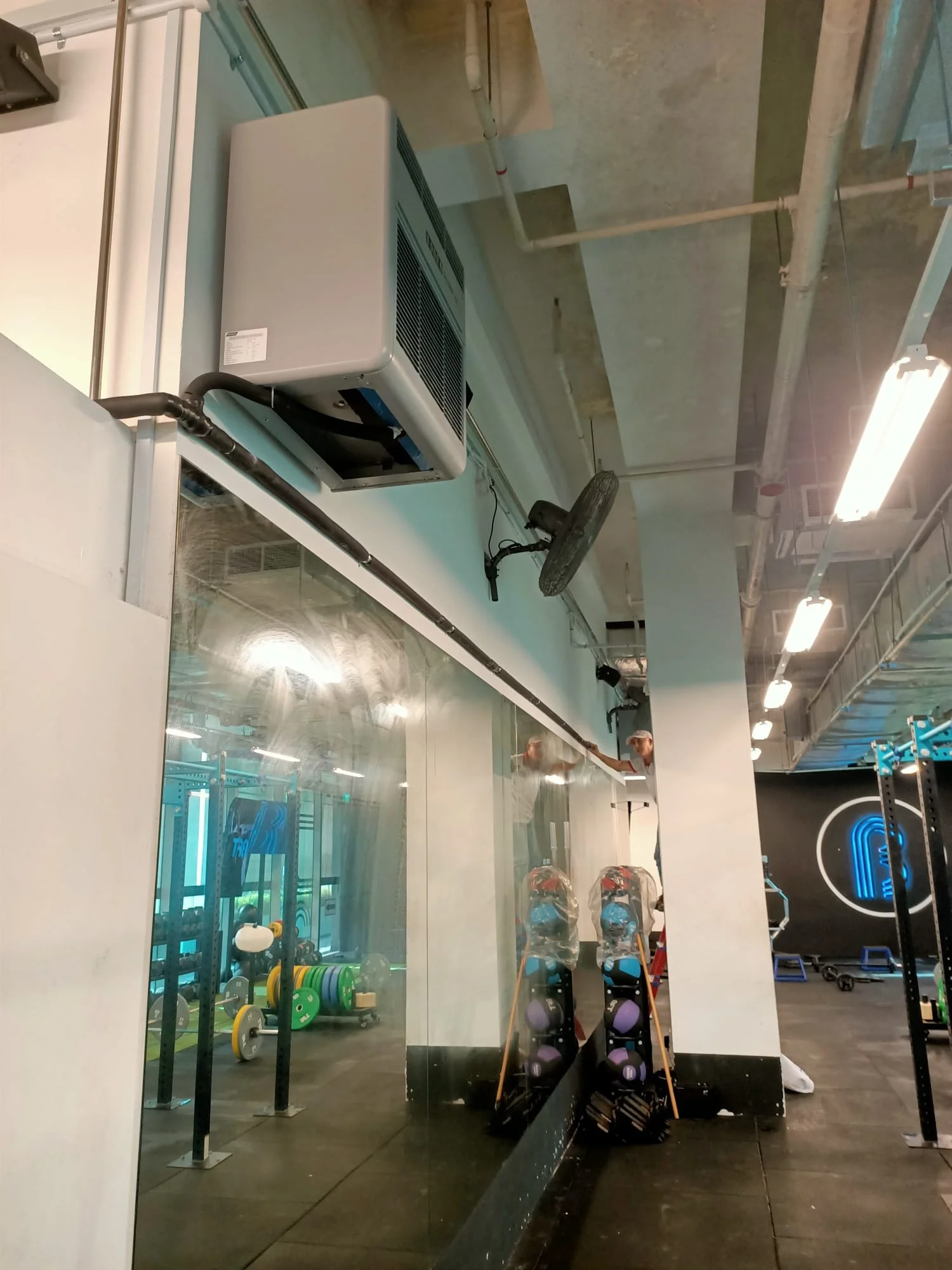
Perspiration alone introduced an estimated 25 litres of water per hour, depending on intensity and individual physiology. Elevated respiration during exercise contributed a further 1.5 litres of moisture per hour. This moisture load far exceeded that of a typical commercial space of similar size.
Although the existing air-conditioning system maintained temperature, it could not remove moisture at the rate it was being generated. As a result, humidity accumulated throughout the day, leading to musty odours, damp rubber flooring, and equipment that failed to dry fully between classes.
THE ASSESSMENT
Understanding why temperature control wasn’t enough.
Kruger conducted a site visit to quantify the latent moisture load and evaluate how effectively humidity could be removed between training sessions. The assessment focused on three key factors: moisture generation from occupants, air circulation patterns within the space, and the ability of the existing system to dry surfaces during off-peak hours.
The findings showed that cooling alone addressed sensible heat but left substantial residual humidity, particularly at floor level where rubber mats and equipment absorbed moisture. Without dedicated dehumidification, this residual moisture compounded over consecutive classes.
KRUGER’S SOLUTION
Introducing dedicated humidity control where cooling fell short.
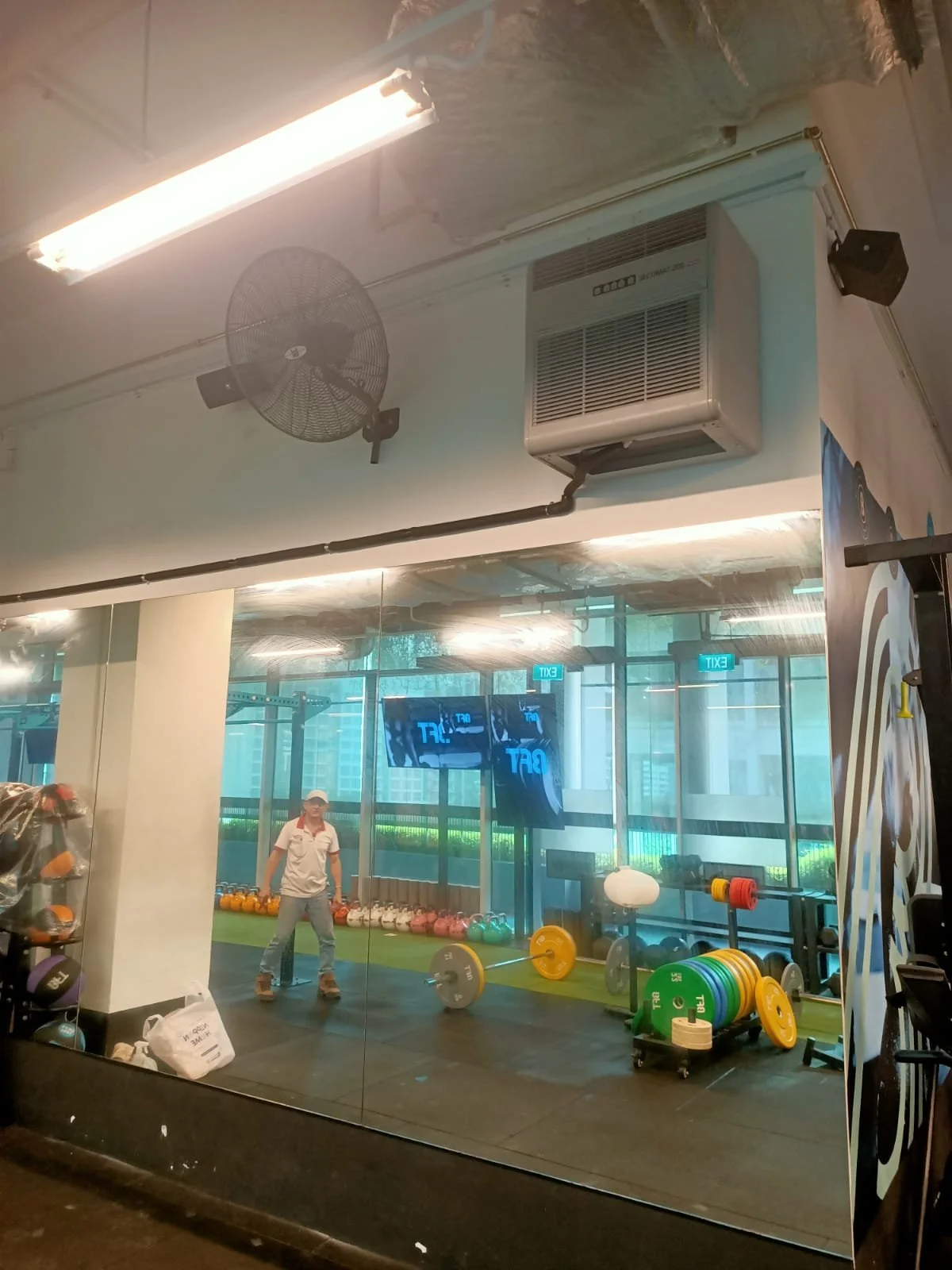
Based on the assessment, Kruger recommended a targeted dehumidification strategy using two Secomat 20S industrial dehumidifiers, selected for their high airflow and drying capability.
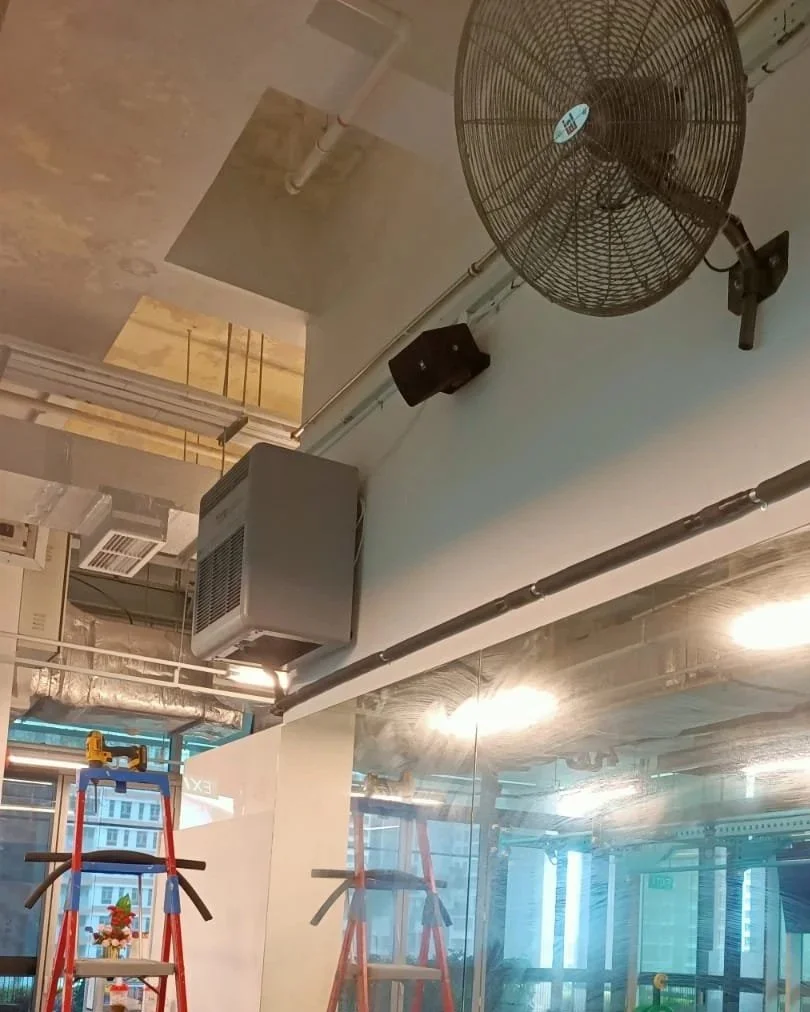
The units were installed at approximately two metres above ground level to maximise circulation while preserving usable floor space. During a two-week trial period, the dehumidifiers were operated for extended hours, including outside class times, to actively dry flooring, equipment, and the surrounding air rather than allowing moisture to accumulate overnight.
The system was configured to prioritise ventilation and drying performance rather than comfort cooling, ensuring moisture was continuously extracted from the space.
SOLUTION DEPLOYMENT
Two industrial-grade dehumidifers installed approximately 2m above ground level to maximise circulation, while preserving precious usable gym floor space.
THE IMPACT
Restoring indoor air quality and training comfort for both staff and members.
The change was evident in day-to-day gym operations almost immediately.
During the trial, average relative humidity during peak classes fell by approximately 35–40% RH compared with baseline conditions, reducing persistent dampness and improving comfort for both staff and members, even during back-to-back sessions.
WHY IT MATTERS
In high-intensity fitness environments, unmanaged humidity quickly translates into operational problems. Odour complaints, damp surfaces, and premature equipment deterioration increase maintenance burden and erode the training experience.
This case demonstrates why industrial-grade dehumidification is essential for gyms operating at high utilisation, supporting consistent daily operations, protecting equipment, and sustaining member satisfaction beyond what air-conditioning alone can deliver.
Talk to Singapore’s Humidity Control Experts.
Whether you’re managing an industrial facility or improving your home environment, Kruger provides in-house engineering, local servicing, and expert consultation at every step.
Start with a free humidity assessment and trial unit, and experience why Kruger is trusted by Singapore’s industries and homeowners alike.