
CASE STUDY
Precision Humidity Control in a Pharmaceutical Laboratory
When uncontrolled humidity disrupted product handling and process reliability.
Humidity levels were disrupting material handling and product consistency at a pharmaceutical laboratory in Singapore. Elevated moisture caused pill clumping and handling variability during preparation, even with desiccants in place. To protect product integrity and process reliability, the facility required controlled humidity below critical thresholds across sensitive areas. Kruger was engaged to assess the humidity risk and implement a solution capable of maintaining controlled relative humidity in proximity to sensitive production and handling areas.
THE CHALLENGE
When Humidity Began to Affect Product Behaviour.
Pharmaceutical laboratories operate in environments where material behaviour must remain consistent under varying operating conditions. In this facility, ambient outdoor humidity frequently exceeded 80% RH, creating persistent moisture pressure on indoor spaces.

Internal humidity fluctuated significantly depending on occupancy, equipment operation, and daily cycles. These fluctuations affected the behaviour of moisture-sensitive materials during weighing, handling, and preparation. Even with desiccants in use, elevated humidity led to pill clumping and reduced flowability, increasing process variability and the need for additional checks.
While the facility did not experience temperature non-compliance, uncontrolled humidity became a growing operational risk, affecting repeatability, confidence in handling outcomes, and overall process reliability.
THE APPROACH
Separating Material Sensitivity From Room Conditions.
Kruger conducted a humidity-focused assessment centred on material sensitivity, moisture ingress, and localised environmental behaviour. Rather than evaluating room averages alone, the assessment examined how humidity behaved in proximity to handling and preparation areas, including during early morning start-up and low-activity periods.
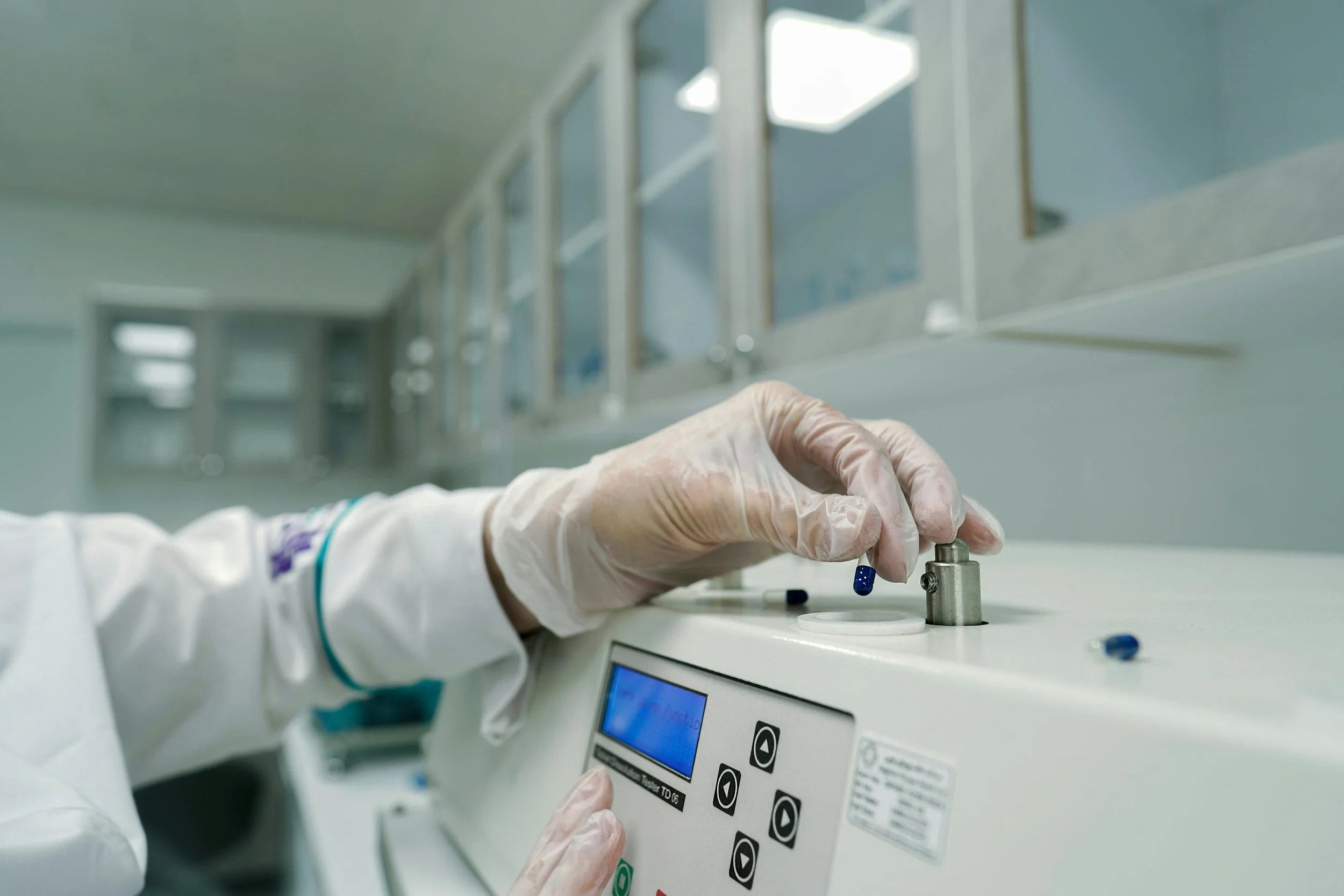
The findings showed that humidity levels routinely exceeded thresholds at which moisture-sensitive pharmaceutical materials begin to exhibit clumping and handling instability. These excursions occurred regardless of cooling performance, indicating that the issue was not temperature-related but driven by insufficient humidity control under Singapore’s climatic conditions.
THE SOLUTION
Localised Humidity Control for Sensitive Processes.
Kruger implemented a customised KRS Series dehumidification solution, configured specifically to stabilise relative humidity in areas where material handling and preparation took place.
The system was designed to maintain humidity below critical thresholds, typically at or below 50% RH, to reduce the risk of pill clumping and moisture-related variability. A decentralised approach was adopted. A KRS units were positioned close to sensitive laboratory zones rather than relying on whole-space control, ensuring that humidity was stabilised where it mattered most. The system operated continuously to prevent moisture build-up during both active and idle periods, maintaining predictable conditions throughout the day.
THE IMPACT
Restoring Predictable Material Handling and Process Confidence
<50% RH Maintained
Humidity controlled below critical thresholds in sensitive laboratory areas
±3–5% RH stability achieved
Humidity variation reduced from >15% RH to a narrow operating band
Material handling stabilised
Pill clumping and moisture-related handling variability mitigated
Following implementation, humidity conditions stabilised across monitored laboratory zones. Relative humidity variation was reduced to approximately ±3–5% RH, compared with fluctuations exceeding 15% RH previously. Material handling became more consistent, with reduced instances of pill clumping and moisture-related variability during routine laboratory activities.
By maintaining humidity below critical thresholds throughout operating cycles, the laboratory achieved greater confidence in daily processes and internal quality checks, with fewer environmental adjustments required.
WHY IT MATTERS
In pharmaceutical environments, uncontrolled humidity directly affects material behaviour, process reliability, and downstream quality risk. Maintaining stable relative humidity is essential not only for compliance, but for ensuring that products behave as designed throughout handling and preparation.
This case demonstrates why humidity control must be treated as a process-critical engineering requirement, particularly in Singapore’s climate, where ambient moisture levels routinely exceed the tolerance of pharmaceutical materials.

Talk to Singapore’s Humidity Control Experts.
Whether you’re managing an industrial facility or improving your home environment, Kruger provides in-house engineering, local servicing, and expert consultation at every step.
Start with a free humidity assessment and trial unit, and experience why Kruger is trusted by Singapore’s industries and homeowners alike.